Cleanings & Prevention
- Dental Exams & Cleanings
- Digital X-Rays
- Diagnodent®
- Fluoride Treatment
- Oral Cancer Exam
- Sealants
- Oral Hygiene Aids
- Athletic Mouth Guards
- Home Care
- How to Brush & Floss
General Family, Cosmetic & Sleep Dentistry · Middleborough, MA
What does your smile say about you? Let us help you radiate confidence with a healthy smile.
Welcome to our practice
What does a smile say about you? I’m confident, happy, and successful. No matter your age your smile is often the first impression of you others will experience.
Are you anxious or fearful when going to a dentist? If that’s you, we are the perfect place for you to get comfortable going back to a dentist. We pride ourselves on not just treating our patients with compassion, but also minimizing the discomfort and pain that has historically been associated with a visit to the dentist.
Our mission at the office of James J. Samia, D.M.D. is to provide the best comprehensive dentistry that is available; and to do so in a caring and professional environment that will leave you with the feeling of “Hey, that wasn’t so bad why did I wait so long?”
So, if you haven’t seen a dentist for a while, or are looking for a new dentist, feel free to contact us and experience the difference.
Minimizing discomfort and pain at every visit.
Whitening, bonding, porcelain crowns and more.
Sleep apnea appliances and TMJ care.
Pediatric through adult dental care.

Meet the doctor
Dr. Samia received an undergraduate degree in Biology from Suffolk University before attending and graduating from Tufts University School of Dental Medicine and started his private practice in 1994.
“One area of my practice that I probably take the greatest pride in is my ability to put my patients at ease. Many people have concerns, even fears of going to a dentist, and I have a great deal of success in this area. Whether it’s restorative dentistry, cosmetic dentistry, crowns, endodontics, or just general dental health and hygiene, I want my patients to be comfortable with my expertise and my goal is to provide them with the highest quality dental services available.”
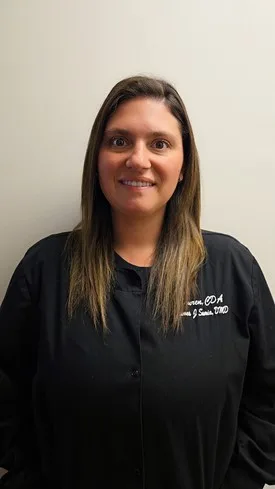
Meet the team
At the core of our dental practice is a friendly team of professionals that are dedicated to your utmost comfort and optimal oral health. We view each patient as a unique individual, and tailor each treatment to your specific needs. As part of our commitment to providing close, personalized attention to every patient, we want to encourage patient communication. Please know that we are here to provide outstanding patient care, and that we value the trust you have placed in us.



Procedures
Whether your dental needs are a complete exam and cleaning, a full-mouth restoration, or anything in between, we promise to provide you with exceptional care as we enhance the natural beauty of your smile — with a gentle touch and stunning results.
Patient information
For your convenience, access our on-line registration forms below, or call us at (508) 947-6606.
We are pleased to accept the CareCredit healthcare credit card. CareCredit lets you say “Yes” to recommended surgical and non-surgical dental procedures like crowns, oral surgery or even a general checkup, and pay for them in convenient monthly payments that fit your financial situation. It’s free and easy to apply and you’ll receive a decision immediately. If you’re approved, you can schedule your procedures even before you receive your card. Learn more at carecredit.com or contact our office. Apply Now
*Subject to credit approval. Minimum monthly payments required. Visit carecredit.com for details.
FAQs
Below are some of the most frequently asked questions patients have about dentistry and oral health issues. If you have any other questions, or would like to schedule an appointment, we would love to hear from you.
Bad breath (halitosis) can be an unpleasant and embarrassing condition. Many of us may not realize that we have bad breath, but everyone has it from time to time, especially in the morning.
There are various reasons one may have bad breath, but in healthy people, the major reason is due to microbial deposits on the tongue, especially the back of the tongue. Some studies have shown that simply brushing the tongue reduced bad breath by as much as 70 percent.
What may cause bad breath?
Keeping a record of what you eat may help identify the cause of bad breath. Also, review your current medications, recent surgeries, or illnesses with you dentist.
What can I do to prevent bad breath?
In most cases, your dentist can treat the cause of bad breath. If it is determined that your mouth is healthy, but bad breath is persistent, your dentist may refer you to your physician to determine the cause of the odor and an appropriate treatment plan.
Brushing and flossing help control the plaque and bacteria that cause dental disease.
Plaque is a film of food debris, bacteria, and saliva that sticks to the teeth and gums. The bacteria in plaque convert certain food particles into acids that cause tooth decay. Also, if plaque is not removed, it turns into calculus (tartar). If plaque and calculus are not removed, they begin to destroy the gums and bone, causing periodontal (gum) disease.
Plaque formation and growth is continuous and can only be controlled by regular brushing, flossing, and the use of other dental aids.
Toothbrushing – Brush your teeth at least twice a day (especially before going to bed at night) with an ADA approved soft bristle brush and toothpaste.
Electric toothbrushes are also recommended. They are easy to use and can remove plaque efficiently. Simply place the bristles of the electric brush on your gums and teeth and allow the brush to do its job, several teeth at a time.
Flossing – Daily flossing is the best way to clean between the teeth and under the gumline. Flossing not only helps clean these spaces, it disrupts plaque colonies from building up, preventing damage to the gums, teeth, and bone.
Floss holders are recommended if you have difficulty using conventional floss.
Rinsing – It is important to rinse your mouth with water after brushing, and also after meals if you are unable to brush. If you are using an over-the-counter product for rinsing, it’s a good idea to consult with your dentist or dental hygienist on its appropriateness for you.
You should have your teeth checked and cleaned at least twice a year, though your dentist or dental hygienist may recommend more frequent visits.
Regular dental exams and cleaning visits are essential in preventing dental problems and maintaining the health of your teeth and gums. At these visits, your teeth are cleaned and checked for cavities. Additionally, there are many other things that are checked and monitored to help detect, prevent, and maintain your dental health. These include:
As you can see, a good dental exam and cleaning involves quite a lot more than just checking for cavities and polishing your teeth. We are committed to providing you with the best possible care, and to do so will require regular check-ups and cleanings.
Four out of five people have periodontal disease and don’t know it! Most people are not aware of it because the disease is usually painless in the early stages. Unlike tooth decay, which often causes discomfort, it is possible to have periodontal disease without noticeable symptoms. Having regular dental check-ups and periodontal examinations are very important and will help detect if periodontal problems exist.
Periodontal disease begins when plaque, a sticky, colorless, film of bacteria, food debris, and saliva, is left on the teeth and gums. The bacteria produce toxins (acids) that inflame the gums and slowly destroy the bone. Brushing and flossing regularly and properly will ensure that plaque is not left behind to do its damage.
Other than poor oral hygiene, there are several other factors that may increase the risk of developing periodontal disease:
Signs and Symptoms of Periodontal Disease
Good oral hygiene, a balanced diet, and regular dental visits can help reduce your risk of developing periodontal disease.
Brushing our teeth removes food particles, plaque, and bacteria from all tooth surfaces, except in between the teeth. Unfortunately, our toothbrush can’t reach these areas that are highly susceptible to decay and periodontal (gum) disease.
Daily flossing is the best way to clean between the teeth and under the gumline. Flossing not only helps clean these spaces, it disrupts plaque colonies from building up, preventing damage to the gums, teeth, and bone.
Plaque is a sticky, almost invisible film that forms on the teeth. It is a growing colony of living bacteria, food debris, and saliva. The bacteria produce toxins (acids) that cause cavities and irritate and inflame the gums. Also, when plaque is not removed above and below the gumline, it hardens and turns into calculus (tartar). This will further irritate and inflame the gums and also slowly destroy the bone. This is the beginning of periodontal disease.
How to floss properly:
Floss holders are recommended if you have difficulty using conventional floss.
Daily flossing will help you keep a healthy, beautiful smile for life!
If you’re feeling somewhat self-conscious about your teeth, or just want to improve your smile, cosmetic dental treatments may be the answer to a more beautiful, confident smile.
Cosmetic dentistry has become very popular in the last several years, not only due to the many advances in cosmetic dental procedures and materials available today, but also because patients are becoming more and more focused on improving their overall health. This includes dental prevention and having a healthier, whiter, more radiant smile.
There are many cosmetic dental procedures available to improve your teeth and enhance your smile. Depending on your particular needs, cosmetic dental treatments can change your smile dramatically, from restoring a single tooth to having a full mouth make-over. Ask your dentist how you can improve the health and beauty of your smile with cosmetic dentistry.
Cosmetic Procedures:
Teeth Whitening: Bleaching lightens teeth that have been stained or discolored by age, food, drink, and smoking. Teeth darkened as a result of injury or taking certain medications can also be bleached, but the effectiveness depends on the degree of staining present.
Composite (tooth-colored) Fillings: Also known as “bonding”, composite fillings are now widely used instead of amalgam (silver) fillings to repair teeth with cavities, and also to replace old defective fillings. Tooth-colored fillings are also used to repair chipped, broken, or discolored teeth. This type of filling is also very useful to fill in gaps and to protect sensitive, exposed root surfaces caused by gum recession.
Porcelain Veneers: Veneers are thin custom-made, tooth-colored shells that are bonded onto the fronts of teeth to create a beautiful individual smile. They can help restore or camouflage damaged, discolored, poorly shaped, or misaligned teeth. Unlike crowns, veneers require minimal tooth structure to be removed from the surface of the tooth.
Porcelain Crowns (caps): A crown is a tooth-colored, custom-made covering that encases the entire tooth surface restoring it to its original shape and size. Crowns protect and strengthen teeth that cannot be restored with fillings or other types of restorations. They are ideal for teeth that have large, fractured or broken fillings and also for those that are badly decayed.
Dental Implants: Dental implants are artificial roots that are surgically placed into the jaw to replace one or more missing teeth. Porcelain crowns, bridges, and dentures can be made specifically to fit and attach to implants, giving a patient a strong, stable, and durable solution to removable dental appliances.
Orthodontics: Less visible and more effective brackets and wires are making straightening teeth with orthodontics much more appealing to adult patients. Also, in some cases, teeth may be straightened with custom-made, clear, removable aligners that require no braces.
Thanks to the advances in modern dentistry, cosmetic treatments can make a difference in making your smile shine!
Since teeth whitening has now become the number one aesthetic concern of many patients, there are many products and methods available to achieve a brighter smile.
Professional teeth whitening (or bleaching) is a simple, non-invasive dental treatment used to change the color of natural tooth enamel, and is an ideal way to enhance the beauty of your smile. Over-the-counter products are also available, but they are much less effective than professional treatments and may not be approved by the American Dental Association (ADA).
As we age, the outer layer of tooth enamel wears away, eventually revealing a darker or yellow shade. The color of our teeth also comes from the inside of the tooth, which may become darker over time. Smoking, drinking coffee, tea, and wine may also contribute to tooth discoloration, making our teeth yellow and dull. Sometimes, teeth can become discolored from taking certain medications as a child, such as tetracycline. Excessive fluoridation (fluorosis) during tooth development can also cause teeth to become discolored.
It’s important to have your teeth evaluated by your dentist to determine if you’re a good candidate for bleaching. Occasionally, tetracycline and fluorosis stains are difficult to bleach and your dentist may offer other options, such as veneers or crowns to cover up such stains. Since teeth whitening only works on natural tooth enamel, it is also important to evaluate replacement of any old fillings, crowns, etc. before bleaching begins. Once the bleaching is done, your dentist can match the new restorations to the shade of the newly whitened teeth.
Since teeth whitening is not permanent, a touch-up may be needed every several years to keep your smile looking bright.
The most widely used professional teeth whitening systems:
Home teeth whitening systems: At-home products usually come in a gel form that is placed in a custom-fitted mouthguard (tray), created from a mold of your teeth. The trays are worn either twice a day for approximately 30 minutes, or overnight while you sleep. It usually takes several weeks to achieve the desired results depending on the degree of staining and the desired level of whitening.
In office teeth whitening: This treatment is done in the dental office and you will see results immediately. It may require more than one visit, with each visit lasting 30 to 60 minutes. While your gums are protected, a bleaching solution is applied to the teeth. A special light may be used to enhance the action of the agent while the teeth are whitened.
Some patients may experience tooth sensitivity after having their teeth whitened. This sensation is temporary and subsides shortly after you complete the bleaching process, usually within a few days to one weak.
Teeth whitening can be very effective and can give you a brighter, whiter, more confident smile!With many state-of-the-art dental treatments and prevention options available in dentistry today, there are fewer reasons for having to extract (remove) teeth. When something does go wrong with a tooth, we try to do everything possible to restore the tooth to its original function. Removing a tooth is the last option because we know that removal may lead to severe and costly dental and cosmetic problems if the tooth is not replaced.
Losing a tooth can be a very traumatic experience and it’s very unfortunate when it does happen. Injury, accident, fracture, severe dental decay, and gum disease are the major reasons for having to remove a tooth. If teeth are lost due to injury or have to be removed, it is imperative that they be replaced to avoid cosmetic and dental problems in the future.
When a tooth is lost, the jaw bone that helped to support that tooth begins to atrophy, causing the teeth on either side to shift or tip into the open space of the lost tooth. Also, the tooth above or below the open space will start to move towards the open space because there is no opposing tooth to bite on. These movements may create problems such as decay, gum disease, excessive wear on certain teeth, and TMJ (jaw joint) problems. These problems and movements do not result immediately, but will eventually appear, compromising your chewing abilities, the health of your bite, and the beauty of your smile.
Options for replacement of missing teeth:
Removable bridges - This type of bridge is a good solution for replacing one or more missing teeth, especially in complex dental situations where other replacement options are not possible. They are usually made of tooth-colored, artificial teeth combined with metal clasps that hook onto adjacent natural teeth. Removable bridges are the most economical option for replacing missing teeth, but may be the least aesthetically pleasing. This is because the metal clasps on the appliances are often impossible to completely conceal.
Fixed bridges - This type of bridge is generally made of porcelain or composite material and is anchored (cemented) permanently to a natural teeth adjacent to the missing tooth site. The benefit of this type of bridge is that it is fixed (not removable) and it is very sturdy. The disadvantage is that in order to create a fixed appliance, two healthy, natural teeth will have to be crowned (capped) to hold the bridge in place.
Dentures - This type of tooth replacement is used when most or all of the natural teeth are missing in one dental arch. Dentures are removable artificial teeth that are made to closely resemble the patients’ original teeth.
Implants - Are a great way to replace one or more missing teeth. They may also be great to support ill fitting dentures. A dental implant is an artificial root that is surgically placed into the jaw bone to replace a missing tooth. An artificial tooth is placed on the implant, giving the appearance and feel of a natural tooth. Implants are very stable, durable, and are the most aesthetically pleasing tooth replacement option.
If you are missing teeth, ask us if they need replacement and what options are available to you. Together we will select the best replacement option for your particular case. Prevention and early treatment is always less involved and less costly than delaying treatment and allowing a serious problem to develop.
Most of us have fillings in our mouths that date back many years and some may have even been placed during our childhood. These fillings may now be old, dark, and unattractive, making us feel self-conscious when we smile, laugh, and talk. Old fillings are not only unattractive, they may also be defective. When a filling is old, the margins (space between the tooth and filling) may eventually open and allow bacteria and food debris to enter, potentially causing dental decay.
Your dentist can check your fillings and evaluate if they are defective and need replacement. Also, if you simply want to replace fillings that are unattractive, you and your dentist can decide which ones should be replaced first and what replacement options would best suit you. There are many state-of-the-art dental filling materials and procedures available today that are quick, painless, and cost effective for replacing old, unattractive or defective fillings.
Options for replacing old, unattractive, or discolored fillings:
Composite (bonding) fillings - These are tooth-colored fillings that can be closely matched to the color of your existing teeth. They are particularly well suited for use in front teeth or visible parts of teeth and are one of the best ways to improve the health and beauty of your smile.
Crowns (Caps) - These types of restoration are used when a tooth is too damaged and cannot be repaired with a filling or other type of restoration. A crown is a covering that encases the entire tooth surface restoring it to its original shape and size. A crown protects and strengthens the remaining tooth structure and can be made of gold, porcelain, and other tooth-colored materials.
Inlays/Onlays - These restorations are custom made fillings. They can be made of composite resin, porcelain or gold and are made by a dental laboratory and placed by a dentist. Inlays/onlays are usually best for the posterior chewing surfaces of teeth and are utilized to conservatively repair teeth that have large defective/unattractive fillings or have been damaged by decay or trauma.
Porcelain veneers - Used primarily in the front teeth, veneers are very thin shells of tooth-shaped porcelain that are individually crafted and permanently cemented to the front surface of teeth. They are a great solution for fixing discolored, pitted, shipped, malformed, or slightly crooked teeth. Veneers are also used if you have unwanted spaces. Veneers are very durable, natural looking, and do not stain. This makes veneers a very popular solution for restoring a smile impaired by old, unattractive fillings.
As you can see, there are various options for replacing old, unattractive fillings. These treatments will provide strong, natural, and long-lasting replacement solutions to enhance the health and beauty of your smile.
Many people are unaware that having periodontal disease (the destruction of gum tissue and bone that hold our teeth in place) can affect your overall health. Periodontal disease is one of the most common infections; often more prevalent than the common cold! Periodontal disease is not only the number one reason people lose teeth; it can also affect the health of your body!
Periodontal disease is a bacterial infection, and in its earliest stages, it’s called gingivitis. It starts when an accumulation of plaque (a colony of bacteria, food debris, and saliva) is NOT regularly removed from the gums and teeth. The bacteria in plaque produce toxins/acids that irritate and infect the gums and eventually destroy the jaw bone that supports the teeth. When periodontal disease is not treated it can eventually lead to tooth loss!
There are numerous studies that have looked into the correlation between gum disease and major medical conditions. These studies suggest people with periodontal disease are at a greater risk of systemic disease and indicate that periodontal disease may cause oral bacteria to enter the bloodstream and travel to major organs and begin new infections. Research suggests that periodontal bacteria in the blood stream may:
Researchers conclude there is still much research to be done to understand the link between periodontal disease and systemic diseases, but enough research has been done to support that infections in the mouth can play havoc elsewhere in the body.
To ensure a healthy, disease-free mouth, we recommend the importance of regular dental check-ups and cleanings, which include a periodontal evaluation. Also, diligent home care and a proper diet can help reduce the plaque and bacteria in the mouth.
Remember….the mouth body connection! Taking care of your oral health may contribute to your overall medical health!
Although thorough brushing and flossing remove most food particles and bacteria from easy to reach tooth surfaces, they do not reach the deep grooves on chewing surfaces of teeth. More than 75 percent of dental decay begins in these deep grooves (called pits and fissures). Toothbrush bristles are too large to possibly fit and clean most of these areas. This is where sealants play an important role.
A sealant is a thin plastic coating that covers and protects the chewing surfaces of molars, premolars, and any deep grooves or pits on teeth. Sealant material forms a protective, smooth barrier covering natural depressions and grooves in the teeth, making it much easier to clean and help keep these areas free of decay.
Who may need sealants?
Children and teenagers - As soon as the six-year molars (the first permanent back teeth) appear or any time throughout the cavity prone years of 6-16.
Infants - Baby teeth are occasionally sealed if the teeth have deep grooves and the child is cavity prone.
Adults - Tooth surfaces without decay that have deep grooves or depressions that are difficult to clean.
Sealants are easily applied by your dentist or dental hygienist and the process only takes minutes per tooth. After the chewing surfaces are roughened with an acid solution that helps the sealant adhere to the tooth, the sealant material is “painted” onto the tooth surface, where it hardens and bonds to the teeth. Sometimes a special light will be used to help the sealant material harden.
After sealant treatment, it’s important to avoid chewing on ice cubes, hard candy, popcorn kernels, or any hard or sticky foods. Your sealants will be checked for wear and chipping at your regular dental check-up.
Combined with good home care, a proper diet, and regular dental check-ups, sealants are very effective in helping prevent tooth decay.
We’re all at risk for having a tooth knocked out. More than 5 million teeth are knocked out every year! If we know how to handle this emergency situation, we may be able to actually save the tooth. Teeth that are knocked out may be possibly reimplanted if we act quickly, yet calmly, and follow these simple steps:
Ways to transport the tooth
The sooner the tooth is replaced back into the socket, the greater the likelihood it has to survive and possibly last for many years. So be prepared, and remember these simple steps for saving a knocked-out tooth.
You can prevent broken or knocked-out teeth by:
Straighter teeth perform chewing, biting and speaking functions more effectively than crooked teeth. In addition, a straight smile boosts confidence, is aesthetically pleasing to look at, and can help stave off a wide variety of dental ailments.
There are several types of malocclusion including overbite, underbite, crossbite, and overcrowding. Each of these alignment problems negatively impacts the functionality and cosmetic appearance of the teeth.
Here is a brief overview of some of the main disorders associated with crooked teeth:
Periodontitis – Periodontitis or gum disease begins with a bacterial infection. The bacterial infection is caused by inadequate oral hygiene. Crooked teeth are hard to clean effectively, which means that debris, plaque and bacteria can build up in hard-to-reach areas. Straight teeth are much easier to clean and are at less risk of contracting gum disease.
Temporomandibular Disorder (TMJ) - Crooked teeth can lead to improper jaw alignment, which in turn causes a painful condition known as TMJ. Severe headaches, jaw pain, lockjaw and the grinding of teeth characterize this debilitating disorder.
Tooth injury – Straight teeth creates a strong wall, which means injuries are less likely to occur. Crooked teeth are weaker and often protrude, making them far more vulnerable to external injury.
Uneven wear – Crooked teeth cause some of the teeth to work harder than others when biting and chewing. Straight teeth share the workload evenly, meaning less risk of injury and better aesthetics.
Teeth can be straightened using either orthodontic braces or customized aligning trays. Orthodontic braces are usually affixed to the teeth for a set duration. The brackets and archwires are tightened regularly by the orthodontist and removed when treatment is complete. Fixed braces can be placed on the front side or back side of the teeth and are effective for most types of malocclusion.
Aligning trays are fully removable and are used where the malocclusion is less severe, and the teeth need to move a shorter distance. These trays are replaced every few weeks for the duration of the treatment, and have proven to be equally effective for straightening teeth.
If you have questions about orthodontics and straightening teeth, please ask your orthodontist.
Patient reviews
Broke a tooth and DR Samia and his staff took care of it same day. Entire staff very accomodating, courteous and professional. Highly recommend Thanks! JamesM
I can’t say enough positive things about Dr. Samia and his staff! They are professional, yet personable and really care about my health and happiness. Working with Dr. Samia and his staff is always a pleasant experience.
We also appreciate reviews on Facebook Google
The health and well-being of our patients is our top priority now and always. In response to the corona virus pandemic we are closely following and adhering to precautions advised by the Centers for Disease Control (CDC) and the Massachusetts Department of Public Health.
We want to assure you that we are taking continuous steps to ensure that our office remains a safe place for every patient. It is important for you to know that dentists are experts in infection control. We have been trained to prevent the spread of infectious diseases such as flu, HIV, hepatitis, and tuberculosis. The precautions we take every day will also help prevent the spread of the corona virus.
Appointment request & contact
The first step towards a beautiful, healthy smile is to schedule an appointment. Please contact our office by phone — our scheduling coordinator will confirm your appointment. Compassionate dental professionals committed to providing quality care in a relaxing atmosphere.
Is this your business? See the before & after →
This site is an independent promotional redesign built by Wicked Fast Web to demonstrate our work — it is not officially affiliated with, endorsed by, or paid for by the business shown here. No subscription or payment is attached. If you're the owner and have questions, want to make it official, or want it taken down, get in touch. Prefer to just grab time on my calendar? Book a 15-minute call.